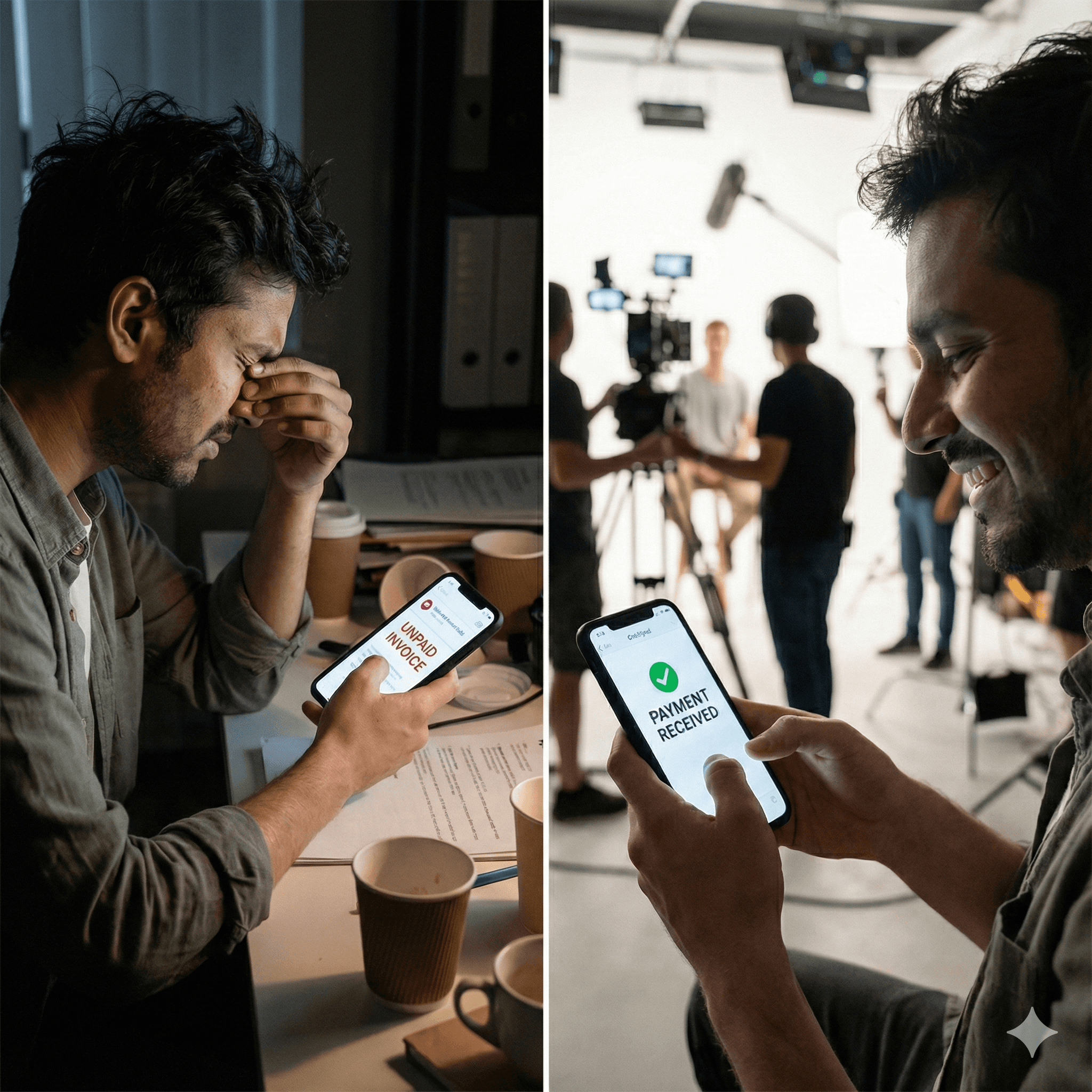
The hidden cost of “paying your dues”
Ask any young assistant director, editor, or cinematographer in Indian film and you will hear the same stories: months of unpaid “assistant” work, stipends that barely cover travel, and freelance projects where the final payment never arrives. The message is clear—if you complain, there is always someone else willing to do it cheaper or for free.
This culture is often romanticised as “paying your dues,” but the consequences are serious. Talented creators drop out because they cannot afford to stay, those who remain are constantly anxious about money, and the industry ends up skewed towards those with family support or inherited safety nets. When basic survival is at risk, creative risk‑taking becomes a luxury few can afford.
Why early‑stage creators are easy to exploit
Several structural factors make exploitation of aspirants and juniors almost inevitable if nothing changes:
No standard rate benchmarks. Many students and freshers have no idea what a fair day rate or project fee looks like for their role and city, so clients and coordinators can anchor them at very low numbers.
Informal, verbal agreements. Work is often confirmed over a call or WhatsApp message with no clear scope, timelines, overtime policy, or payment schedule, making non‑payment hard to contest.
Asymmetry of power and information. Production houses, agencies, and senior technicians know how budgets and unions work; young workers don’t. Fear of being labelled “difficult” keeps many quiet, even when terms are blatantly unfair.
The result is a system where unpaid overtime, last‑minute rate cuts, and months‑late transfers are treated as normal. Changing this culture means giving creators more information, more leverage, and more tools to enforce what was agreed.
Fair pay: moving from “exposure” to minimum standards
A fair creative economy starts with the simple principle that work deserves pay, and pay should be proportionate to skill, responsibility, and market value. That means:
Defining baseline day rates and stipend ranges for common roles (assistant editor, camera assistant, junior designer, etc.) by city and experience band, not leaving everything to ad‑hoc negotiation.
Being honest about unpaid opportunities: if something is truly voluntary (like a passion short film), it should be framed as such—not as a professional role in disguise.
Encouraging creators to track effective hourly pay; when “stipends” translate to less than minimum wage after 14‑hour days, something is broken.
Industry associations and platforms can publish reference ranges and tools so that even a first‑year student can see whether an offer is exploitative at a glance.
Why every gig needs a contract (yes, even small ones)
Contracts can sound intimidating, but at their core they do three simple things:
Describe the work. What is being delivered, by when, and in how many versions.
Describe the money. How much will be paid, when, and under what conditions (advance, milestones, final delivery).
Describe the rights. Who owns the footage, artwork, or audio and how it can be used.
Even a one‑page agreement or structured email thread is miles better than a vague promise over the phone. Clear contracts protect both sides: clients know what they are getting, and creators have something concrete to point to if terms change mid‑way.
For young creators, getting comfortable with simple contract templates is a crucial professional skill, not a luxury. Schools, bootcamps, and platforms can play a big role by providing standard templates and checklists tailored to Indian film and media work.
Escrow: making “on‑time payment” the default
An escrow system adds a missing layer of trust:
The client deposits the agreed fee with a neutral platform before work begins.
The creator can see that the money is locked and cannot vanish midway.
Funds are released automatically when both sides mark the project as complete or when agreed milestones are met.
For freelancers and small studios, this removes the need to chase invoices and “reminder” messages while still giving clients confidence that they are not paying blindly upfront. In sectors where delayed and disputed payments are endemic, escrow can be the difference between creative work being a career and a series of expensive hobbies.
Escrow also creates cleaner data: over time, platforms can show which clients pay reliably and which ones frequently dispute or delay, helping creators decide who to work with.
What creators can start doing today
Even before the entire industry modernises, individual creators can reduce risk by:
Asking for written confirmation of scope, timelines, and fees before starting.
Requesting partial advances or using platforms that offer escrow when possible.
Keeping a log of hours, versions, and changes so scope creep can be discussed with evidence.
Talking openly with peers about rates and experiences, so bad actors find it harder to move unnoticed from one batch of aspirants to the next.
Collective norms change when enough people start asking for clarity and fair treatment.
Why fixing exploitation is good for the industry
Protecting early‑stage creators is not just morally right; it is commercially smart. An industry built on burnout and churn loses promising talent to safer careers and struggles to maintain quality.
When creators can rely on fair pay, contracts, and timely payments, they:
Take bigger creative risks.
Invest in better equipment and upskilling.
Stay in the ecosystem long enough to become experienced heads of department, trainers, and innovators.
The result is a healthier pipeline of talent, more reliable crew for productions, and a reputation that attracts global projects rather than pushing them away.
Check out our other blogs
Creativity Isn’t Free: Valuing Creators’ Time and Fighting Exploitation in India’s Creative Industry
Why early‑stage creators are underpaid, how contracts and escrow can protect them, and what a fair future could look like.
Creativity Isn’t Free: Valuing Creators’ Time and Fighting Exploitation in India’s Creative Industry
Why early‑stage creators are underpaid, how contracts and escrow can protect them, and what a fair future could look like.
Creativity Isn’t Free: Valuing Creators’ Time and Fighting Exploitation in India’s Creative Industry
Why early‑stage creators are underpaid, how contracts and escrow can protect them, and what a fair future could look like.