The Rise of the “Chhota Packet, Bada Dhamaka”
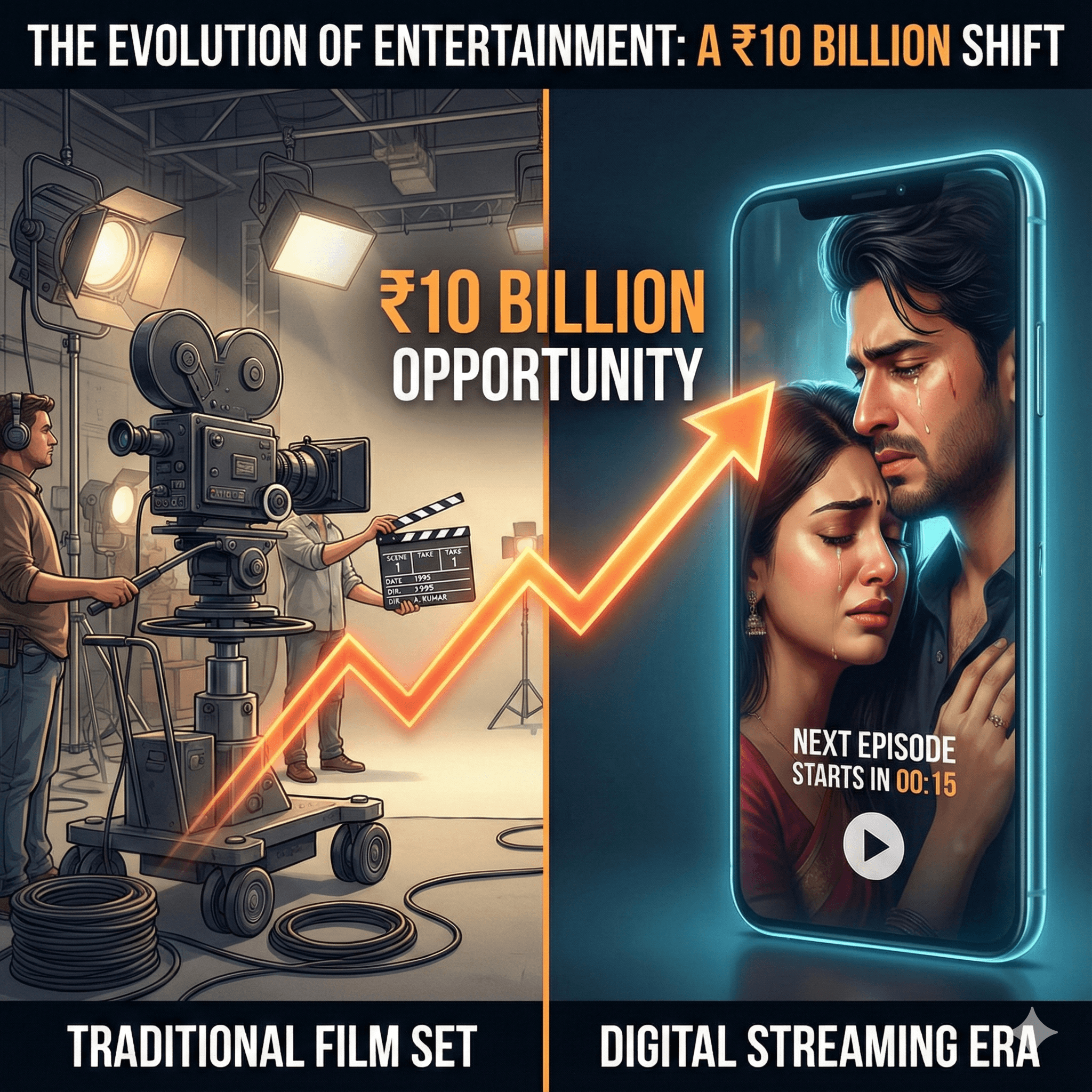
Imagine a soap opera, a thriller, or a romance, but stripped of all the filler. Each episode is 90 seconds long, shot vertically for your phone, and ends on a cliffhanger so sharp you have to click “Next.”
This is the world of micro-dramas, and it is exploding in India. Originating in China (where it’s already a multi-billion dollar industry), this format has found a perfect home in India’s mobile-first, short-attention-span market.
Platforms like Pocket FM (Pocket Novel/Drama), Kuku FM, MiniTV, and emerging players like Flick TV and ReelSaga are pouring millions into this format. Why? Because while traditional OTT series cost crores and take months to produce, a micro-drama series can be shot in a week for a fraction of the price—and monetize instantly through micro-payments (pay-per-episode).
For India’s creative workforce, this isn’t just a new format; it’s a volume game that creates thousands of new paying gigs.
Why this matters for YOU (Demand & Supply)
The shift from 2-hour movies to 2-minute episodes changes the economics of hiring. Here is how our community can prepare.
For Creators (Supply Side)
If you are a filmmaker, editor, writer, or actor, the “wait for a big break” is over. Micro-dramas need content now.
Writers: The demand is for “hook-heavy” scripts. You need to write cliffhangers every 60 seconds. It’s a specialized skill that pays well because retention is everything.
Editors: Vertical editing is no longer just for Reels. It’s for narrative storytelling. Speed and visual pacing are key.
Actors: Instead of waiting for one film role a year, you could be shooting 3 different micro-series a month. It’s steady work and massive visibility.
Directors/DOPs: You don’t need cinema-grade setups. You need speed. Can you shoot 20 episodes in 3 days with a minimal crew? That’s the new superpower.
Opportunity: This is the perfect training ground for “Emerging Pros” to build a volume of work and get paid fast.
For Studios & Producers (Demand Side)
For indie production houses, this is a lifeline. You don’t need Netflix to greenlight your show.
Low Risk, High Reward: A micro-drama series can be produced for ₹10–15 lakhs (or even less with AI tools). If it flops, you move on. If it hits, you have an IP franchise.
New Revenue Models: You aren’t dependent on ad revenue alone. Users pay ₹10 or ₹20 to unlock episodes, creating direct cash flow.
Brand Integration: Brands love this format because it’s cheaper than a TVC but gets higher engagement than a banner ad.
The Future: Opportunities vs. Threats
The Pros:
Democratization: You don’t need Mumbai connections to make a hit. A team in Indore or Kochi can produce a global smash.
Steady Income: High volume means continuous employment for crew, unlike the “feast or famine” cycle of feature films.
AI Integration: AI tools for scriptwriting, storyboarding, and even background generation are slashing costs further, empowering small teams.
The Cons & Threats:
Quality Trap: The rush for volume can lead to low-quality, trashy content. Creators risk getting pigeonholed into “cheap” production value.
Burnout: The pace is grueling. Shooting 50 episodes in a week is physically demanding.
Platform Dependency: Just like YouTube, if the platform changes its algorithm or monetization policy, your income can vanish overnight.
How to Prepare for 2026
Upskill for Vertical: If you are a DOP, learn to frame for 9:16. If you are a writer, learn the “3-second hook” rule.
Build Lean Teams: Studios need to assemble agile crews that can move fast. (Hint: CREA is built exactly for this rapid hiring).
Own Your IP: Don’t just work for hire. If you can, try to co-produce or retain some rights to the stories you create.
The micro-drama wave is essentially the gig economy meeting Bollywood. It’s messy, it’s fast, but for the first time in years, it’s a wide-open door for new talent.
External links
Check out our other blogs
The 2-Minute Blockbuster: How Micro-Dramas Are Rewriting India’s Creative Economy
Why vertical, episodic storytelling is the next gold rush for Indian creators—and how you can ride the wave before it peaks.
The 2-Minute Blockbuster: How Micro-Dramas Are Rewriting India’s Creative Economy
Why vertical, episodic storytelling is the next gold rush for Indian creators—and how you can ride the wave before it peaks.
The 2-Minute Blockbuster: How Micro-Dramas Are Rewriting India’s Creative Economy
Why vertical, episodic storytelling is the next gold rush for Indian creators—and how you can ride the wave before it peaks.